You don’t see it, but it’s there. Roof underlayment plays a critical role in protecting your roof. Installed beneath the shingles, this layer helps block moisture, resist wind-driven rain, and protect the roof deck from long-term damage.
Understanding roof underlayment and how a professional roofing company installs it can help you to see why it’s such an important part of a reliable roofing system.
What Roof Underlayment Is and Why It Matters
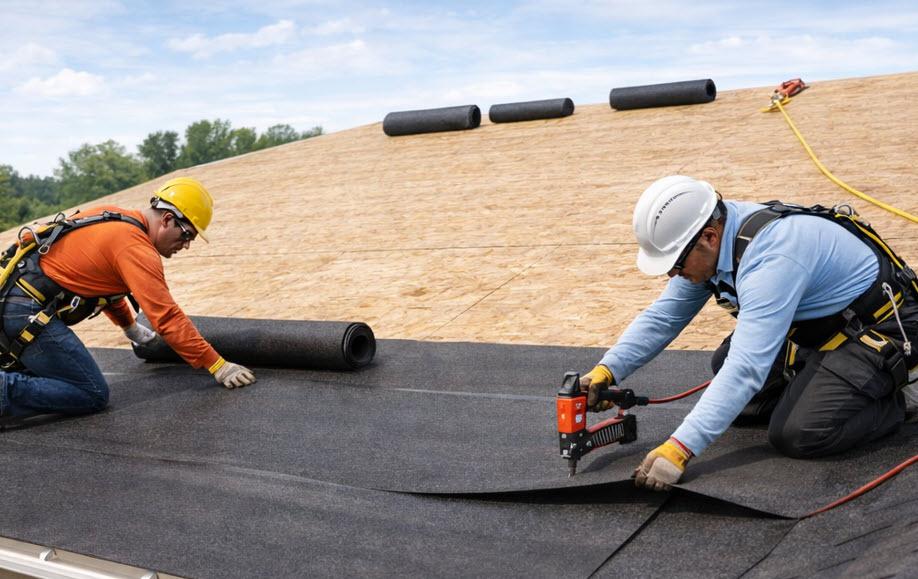
Roof underlayment is installed directly on top of the roof deck before shingles are applied, creating an added layer of protection for the structure of your home. Its purpose is to prevent moisture from reaching the roof deck if water finds its way beneath the outer roofing materials.
Sometimes, even properly installed shingles can allow small amounts of water underneath during heavy storms or strong winds. When that happens, underlayment helps keep that moisture from soaking into the roof deck, where it could eventually lead to wood rot, mold growth, or structural damage.
Common Types of Roof Underlayment Used in Professional Roofing
There are a few types of underlayment, each using different materials depending on the roof design, weather exposure, and long-term performance needs. Professional roofing contractors typically choose the type of underlayment that best supports the performance and durability of the entire roofing system.
Asphalt-Saturated Felt
Asphalt-saturated felt has been used in roofing for decades and is one of the most traditional underlayment materials. Often referred to as roofing felt or tar paper, it is made from a base layer of organic materials or fiberglass that has been saturated with asphalt to improve water resistance.
Felt underlayment can still perform well in many roofing systems. However, it can absorb moisture and may wrinkle if exposed to rain before shingles are installed. Because of this, many modern roofing systems now use materials that offer improved durability and weather resistance.
Synthetic Underlayment
In many modern roofing projects, synthetic underlayment has become a common choice for professional installations. It is made from engineered polymer materials designed to resist tearing, repel water, and provide strong coverage across the roof deck.
Compared with traditional felt, synthetic underlayment is typically lighter, stronger, and less likely to absorb moisture.
Self-Adhering Underlayment
Self-adhering underlayment is designed to seal directly to the roof deck. It is commonly installed in areas that are more vulnerable to leaks, such as roof valleys, around vents or chimneys, and along roof edges.
Because the material bonds directly to the surface, it can help create a tighter seal around fasteners and provide additional protection in areas where water tends to collect or flow.
How Roof Underlayment Protects Against Moisture
Shingles act as the first line of defense against the elements, while the underlayment helps reinforce that protection underneath. One of the most important jobs of roof underlayment is protecting the roof deck from moisture intrusion. When rain is driven under shingles by strong winds or when snow begins to melt on the roof, water can sometimes find small paths beneath the outer roofing materials.
Underlayment creates a continuous protective barrier, which reduces the risk of damage that could lead to leaks, mold growth, or structural issues over time. Over time, repeated moisture exposure can weaken roofing materials, which can contribute to long-term roofing system failure if the roof deck is not properly protected.
Why Proper Installation Is So Important
Even the best roofing materials depend on proper installation to perform the way they should. Roof underlayment must be installed carefully to provide consistent coverage across the roof deck.
Professional roofers pay close attention to overlapping the material correctly, fastening it securely, and protecting vulnerable areas where water is more likely to collect or enter. Roof valleys, edges, flashing points, and penetrations around vents or chimneys all require careful handling.
If underlayment is installed with gaps, wrinkles, or poor alignment, moisture can still reach the roof deck despite the added layer of protection. That is why experienced roofing contractors treat underlayment installation as a critical step in building a durable roofing system.
The Hidden Layer That Helps Protect Your Home
Since roof underlayment is hidden from view, it’s all too easy for homeowners to fail to recognize how important it is to the roof’s ability to handle changing weather conditions and long-term exposure to moisture. It can hold up the shingles and protect the structure below.
At Topper Roofing, we want every homeowner to be aware of the value and quality of the products we use and the work we do to our clients’ homes. Let us protect your home. Contact us today to schedule a free professional roof inspection to check if your underlayment is properly installed.