Winter in Maryland is not always synonymous with record-breaking snowstorms, but even a few moderate snowfalls can create the right conditions for one of the most common and most misunderstood causes of roof damage: ice dams.
We see it every year. A homeowner calls us after noticing a stain on the ceiling or water dripping into a corner of the attic. Nine times out of ten, the cause isn’t a roof that suddenly “failed.” It’s a slow, quiet process that started with snow, uneven roof temperatures, and clogged drainage. The frustrating part is that most of these issues are preventable with a little seasonal prep.
Today, we want to walk you through how ice dams form, why they can cause real trouble inside your home, and the simple steps that can keep your roof safe all winter long.
What Exactly Is an Ice Dam? (And Why Does It Happen?)
In most cases, when snow falls on a roof, two things occur simultaneously:
- The top portion of the roof heats up first, either by sunlight or heat escaping from your living space.
- The lower edges of the roof stay colder, and that includes the eaves that hang past your exterior walls.
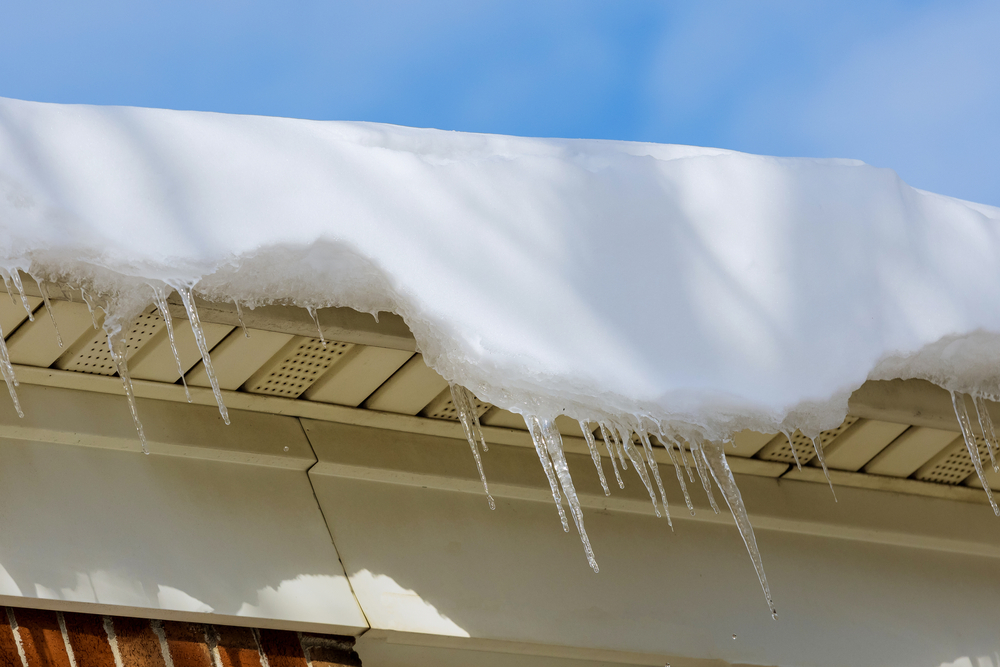
That warmth at the top melts some of the snow. Water runs down the roof until it hits that colder edge. Then it refreezes and builds up slowly, along the bottom of the roofline, Angi explained.
That’s the “dam.”
Once the dam is present, the next round of melting snow has nowhere to go. Water pools, then pushes its way under the shingles. From there, it can leak into decking, insulation, walls, and ceilings.
That is why many homeowners don’t notice the problem until spring, when that water finally reveals itself inside the house.
Common Signs You May Be Dealing With an Ice Dam
You may be at risk if you notice:
- Icicles forming along gutters (especially large and thick ones)
- Uneven melting on your roof bare patches at the top, and snow stuck at the bottom
- Water stains appearing on ceilings or in the corners of exterior rooms
- Damp or matted insulation in the attic
- A musty odor emanating from rooms near the roofline
These are not always emergencies, but they are early warning signs that your roof is not shedding winter moisture the way it should.
Why Maryland Homes Are Especially Vulnerable
Our region has the ideal mix of conditions:
- Snow that melts and then refreezes within the same week
- Cold nights and mild daytime sun
- Homes with aging insulation or older ventilation setups
- Trees that drop leaves into gutters right before winter hits
That’s a freeze-thaw pattern that ice dams thrive on. And for that reason, we always encourage Maryland homeowners to treat winter prep as essential roof care-not an afterthought.
How Ice Dams Can Damage More Than Your Roof
The thing about ice dams is they can start small, but the ripple effects can be serious:
1. Shingle and Underlayment Damage
As the water backs up, it can lift shingles or seep below them. The shingles may look fine from the ground even though the protective layers below may already be compromised.
2. Saturated Insulation
Once wet, insulation loses its effectiveness, which means higher heating bills and even more heat escaping into the attic to fuel the cycle of ice-dam formation.
3. Interior Leaks and Stains
Water that sneaks into wall cavities or ceilings can leave stains, damage drywall, and lead to mold growth.
4. Structural Wood Damage
With enough repeated moisture, roof decking and rafters can begin to rot… long before the homeowner realizes there’s a problem.
5. Gutter Damage
The weight of the built-up ice can bend, pull, or detach gutters from the fascia, particularly if gutters are filled with debris.
What You Can Do Now to Prevent Ice Dams This Winter
Here’s what we consistently recommend to Maryland homeowners based on what we see every season:
1. Clean Your Gutters Before the First Snow
Leaves, acorns, and fall debris block proper drainage. If water can’t leave through the gutters, it pools and freezes at the roof’s edge, exactly where the dam begins.
If you do only one thing on this list, make it this.
2. Improve Attic Insulation and Seal Warm-Air Leaks
One of the biggest drivers of uneven roof temperatures is warm air escaping into your attic. Check around:
- Recessed lighting
- Attic access doors
- Bathroom exhaust fans
- Ductwork or pipe penetrations
Sealing these gaps and making sure your insulation is at the proper depth helps keep your roof the same temperature from top to bottom.
3.Ensure Your Attic is Properly Ventilated
Good airflow prevents heat from building up under the roof. Soffit vents, gable vents, or ridge vents all play a role in helping to keep the roof cool and prevent that warm-top/cold-bottom effect.
4. After a Heavy Snow, Remove What You Can (Safely)
A roof rake used from the ground can pull snow off the eaves and lower sections of your roof. This reduces meltwater volume and lowers ice-dam risk.
Never climb onto a snowy roof. The risk of falling isn’t worth it.
5. When Replacing or Repairing a Roof, Add an Ice-and-Water Barrier
When we work on Maryland homes, we often recommend adding this protective layer under the shingles along eaves, valleys, and other vulnerable areas. If meltwater ever does back up, the barrier helps stop it from reaching the wood underneath.
This isn’t something seen by the homeowner after the roof is completed, but one of the most effective long-term defenses.
When to Call a Professional
Not every winter task requires a contractor, but you might want to call one if you notice the following:
- Recurring leaks each winter
- Consistent icicles in the same spots
- Signs of damp insulation
- A ceiling stain that appears suddenly after snowfall
- A history of ice-dam issues in your home
A quick inspection can determine if a problem is ventilation, insulation, shingle wear, or simply clogged drainage. Fixing the root cause now could save thousands in repairs later.
Winter Doesn’t Have to Be Hard on Your Roof
Ice dams don’t happen dramatically or suddenly; they happen quietly, over time. But with a little prep now, you can prevent snow and ice from doing some real damage inside your home.
Our goals at Topper Roofing are to help you stay ahead of winter problems, understand what’s going on under those shingles, and feel confident that your roof can handle the season. If you want a professional team to give your roof a winter-readiness check or address a concern you’ve noticed, we’re always here to help.
Contact us today and let’s make sure that you will enjoy the holiday season!