Have you ever noticed a ceiling stain near your fireplace and wondered how water got there in the middle of winter? Chimney flashing is probably one of those things you don’t think about much, but in cold weather, it’s the source of some very common roof leaks we see.
Understanding how winter weather impacts chimney flashing helps you catch problems early and will save you an emergency call to your local roof repair company when you see water coming through your ceiling or around your fireplace.
What Chimney Flashing Actually Does
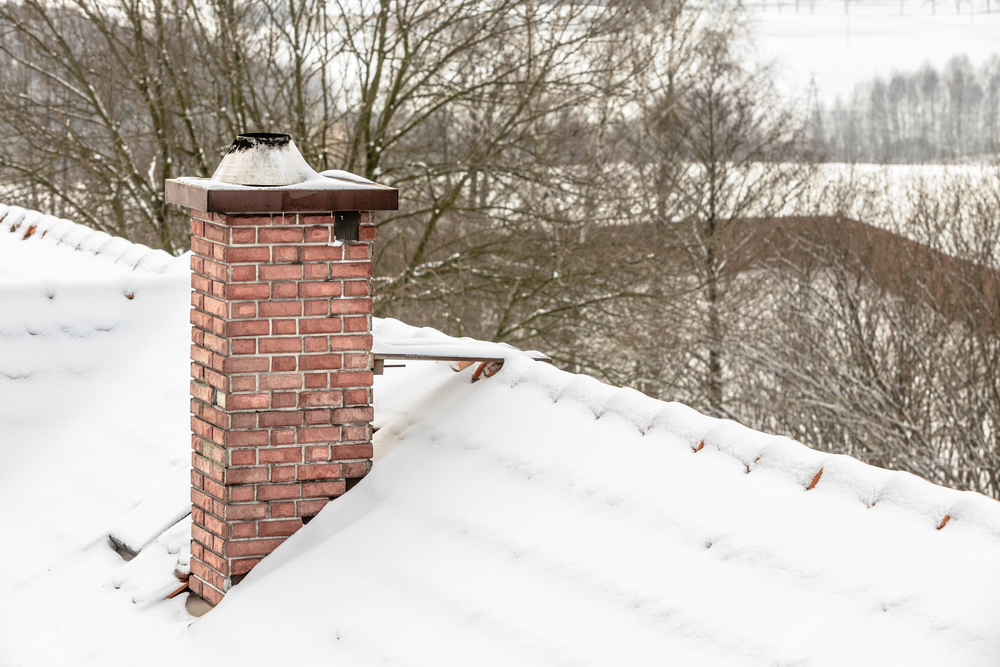
What is chimney flashing? Chimney flashing is the metal barrier that seals the joint where your chimney meets the roof. Since chimneys do not move the same way that roofing materials do, flashing acts as a flexible transition point. Its job is to keep water from sneaking into that seam during rain, snow, and ice.
e ccording to Angi, flashing failures were also purported to be one of the leading causes of chimney leaks. The problem isn’t usually dramatic damage; instead, it can be small gaps, lifted edges, or aging sealant that quietly lets the moisture in.
Why Winter Makes Flashing Problems Worse
Cold weather puts your roof through relentless stress: snow piles up, and then melts. Ice forms, then melts. Temperatures get high and low, above and below freezing. These changes are minor, but over time they may open the door to leaks.
GAF explains how the freeze-thaw cycle affects roofing systems. When water works its way into tiny cracks around flashing and then freezes, it expands. That expansion pushes materials apart. When it melts, water seeps deeper into the gap. This cycle repeats all winter long.
Around a chimney, this can include loosened flashing, degraded sealant, or metal pulled away from brick or siding. Even a slight separation may allow water to reach your roof decking and interior spaces.
Snow, Ice, and Chimneys Don’t Mix Well
Chimneys naturally collect snow and ice because they interrupt the smooth slope of the roof. As snow melts during the day and refreezes at night, water is constantly flowing toward the flashing.
GAF points out how moisture collection around chimneys causes long-term damage if those areas aren’t properly sealed and maintained. When flashing is already worn or not installed properly, winter weather finds the weak spot fast.
Signs Your Chimney Flashing May Be Failing
Flashing problems often remain hidden until water has no place else to go.
Look for:
- Water marks on the ceilings or walls around the chimney
- Damp spots appear in the attic after snow melts.
- Cracked or missing sealant around the base of the chimney
- Rusty or buckled metal flashing
- Musty smell near the fireplace area or a chimney wall
Angi notes that most leaks caused by flashing are often mistakenly attributed to roof or chimney masonry issues, which may delay proper repairs.
Why DIY Repairs Rarely Last
When you see a small gap, the temptation might be to reach for roofing cement or caulk. This will temporarily slow the leak, but generally does not act to resolve the actual problem. In such a case, flashing systems are layered in and tied to shingles, underlayment, and to the chimney structure itself.
As Angi explains that a proper repair often needs surrounding materials removed and reinstall flashing correctly. Surface patches tend to crack again once the temperatures drop or materials shift.
How Topper Roofing Helps You Prevent Winter Chimney Leaks
At Topper Roofing, we see chimney flashing issues year-round, but winter is when small problems turn into urgent ones. Our inspections focus on areas that naturally take the most stress, including chimneys, valleys, and roof penetrations.
We look beyond the surface to check how flashing is integrated with the roof system, how it’s sealed, and whether it can handle Maryland’s freeze-thaw cycles. Catching an early failing flashing detail may save homeowners many interior damage, mold concerns, and more extensive roof repairs.
Don’t Let a Small Detail Cause a Big Problem
Chimney flashing is one of those things that few homeowners pay any attention to-until water starts showing up inside. Winter weather has a way of exposing weak points in a hurry, especially around chimneys, which collect snow and ice.
Whether your roof is aging, your chimney flashing hasn’t been checked in years, or subtle signs of moisture have presented themselves, a professional inspection with Topper Roofing can make quite the difference. It’s a heck of a lot easier to fix a little problem in flashing now than later in water damage repairs, contact us for a free inspection.