
If you’ve been keeping an eye on your roof this summer, you’ve probably been thinking about heat. Sun exposure, hot shingles, a stuffy attic. Those are the obvious concerns. But there’s another problem that can develop during the humid stretch of summer, and it isn’t caused by the heat itself. It’s moisture.
August can bring some of the year’s most humid weather across our service area. When humid air enters your attic and meets a cooler surface, the moisture in it can condense into water. That’s condensation, and because it can happen without a roof leak, it may continue for some time before a homeowner realizes there’s a problem.
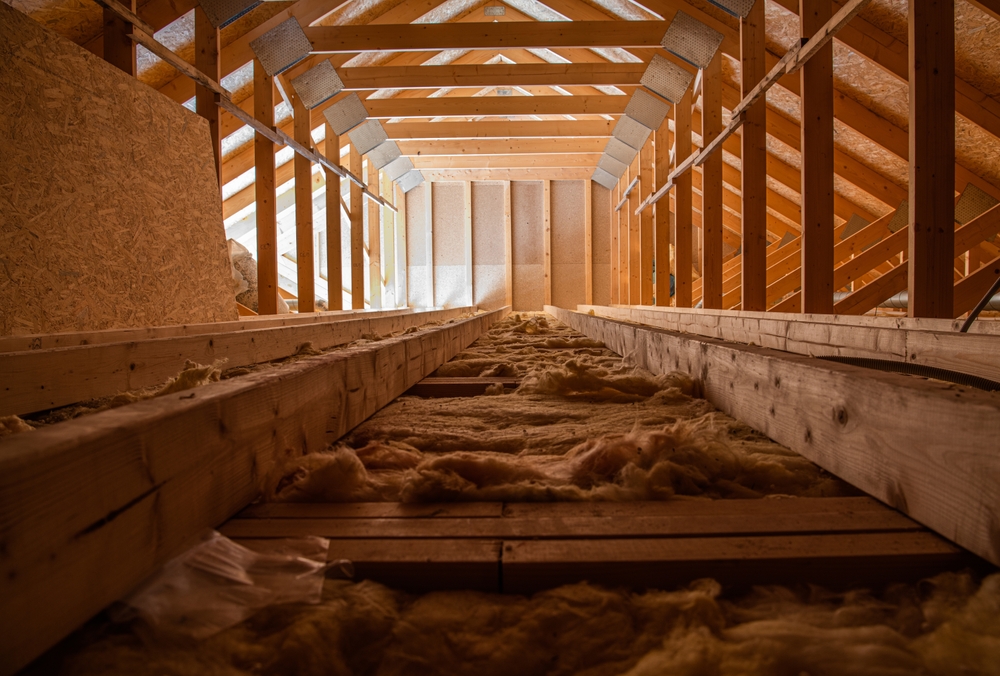
Why Humid Air Can Create Condensation
Your attic does not necessarily need a roof leak to have a moisture problem.
The problem starts when humid air reaches its dew point, the point at which it can no longer hold all of its moisture. That excess moisture then collects on cooler surfaces.
Think about a cold soda glass on a humid summer day. You can see water dripping from the outside of the glass even though nothing was poured on it. The same process happens in the attic where moisture-filled air touches the cool roof decking or other elements.
Where Condensation May Show Up in Your Attic
You may not see a large amount of water. In fact, the first signs can be surprisingly subtle.
When checking an accessible attic space, keep an eye out for:
- Discoloration or staining of the roof decking, especially in parts prone to condensation
- Dampness in the insulation that doesn’t match the appearance of the rest of the insulation
- Visible beads or water in metal objects such as fasteners, straps, or ventilation ducts
- Wet or discolored wood
- Musty smell emanating from the attic hatch
- Water signs near ceiling penetrations or access to the attic
Where Is the Moisture Coming From?
One possible source is outdoor humidity, but it doesn’t have to be the only source.
Moisture is added to the air inside your home every day. The normal activity of taking showers, cooking, washing clothes, and similar activities causes water vapor to be released into the air inside the house. When this humid air finds its way into the attic through gaps in the ceiling, it can contribute to condensation when it meets cooler surfaces.
Possible routes include gaps around attic doors, recessed lighting fixtures, pipes, ducts, and many other places where there is an opening connecting the interior of the house to the attic.
Controlling moisture sources in your living area as well as limiting moisture from entering the attic is one of the main strategies for managing the problem.
Why Persistent Moisture Deserves Attention
A little condensation may not seem like a major issue, especially if the area dries afterward. The concern is what happens when the moisture keeps returning.
The wood decking or framing of your house may be affected by constant exposure to moisture. Wet insulation may fail to function properly while at the same time providing an ideal environment for mold to grow.
The main issue with addressing the problem of mold is that it will only solve one symptom of the larger problem. Unless the source of the problem, the accumulation of moisture in your attic, is addressed, the moisture problem can continue or return.
What Are Some Ways to Prevent Excess Moisture in the Attic?
Make Sure the Attic Has Proper Ventilation
Proper ventilation will ensure that the moist air is circulated out of the attic. Ventilation has two parts, intake and exhaust, which should function in tandem; otherwise, it will not be effective.
Take a Look at the Space Separating Your House from Your Attic
Any gaps found in attic access doors, recessed light fixtures, pipes, and any other spaces will allow this air to rise. Fixing up such spaces can ensure moisture remains where it is supposed to be.
Check the Insulation
The insulation is one way through which you can separate your living space from your attic. In the absence of adequate insulation, or if the insulation is damaged, it won’t work as intended.
Insulation is only one part of the picture. If there are air leaks or ventilation problems, simply adding more insulation may not address the reason condensation is occurring.
When Should You Have Your Attic Checked?
Is moisture from the living space making its way into the attic? Is the venting system working as expected? Is there actually a roof leak that needs to be addressed? Is there moisture penetrating the insulation or roof sheathing?
These are the types of things that call for a thorough investigation of the roof and attic system.
At Topper Roofing, we look at the roof and attic together to determine whether you’re dealing with condensation, a roof leak, or another moisture problem.
Don’t Let Late-Summer Moisture Become a Bigger Problem
It’s easy to overlook your attic during summer, especially if everything looks normal from the outside. However, the condition of the space above your ceiling can tell you a lot about how your home is handling moisture.
Checking for any signs of moisture in the attic will only take a few minutes but could alert you to a potential issue that might have been otherwise overlooked. If you aren’t sure whether it’s condensation, poor ventilation, or any roofing problems, Topper Roofing can help you figure out the source of the issue.
At Topper Roofing, we’ve been helping homeowners across the Mid-Atlantic region protect their homes since 1988. If something doesn’t look right in your attic, contact us and let our team take a closer look.